

The short answer is 2020 through 2022. Here is the long answer, generation by generation, with the specific things to check on each one before you hand over any money.
The best year for a used Toyota Highlander is 2020 to 2022. Those are early fourth-generation cars, which means you get the new platform, a much better cabin, Toyota Safety Sense 2.0 standard on every trim, and the 3.5-liter V6 that Toyota had been building and refining for years.
Buying on a tighter budget, 2017 to 2019 is the value sweet spot. The 2017 refresh gave the previous generation an updated 3.5-liter V6, an 8-speed automatic and standard driver aids, so a clean 2018 does almost everything a 2020 does for less money.
Three-row SUVs are what this lot does best, and the Highlander is the one we know most intimately. Ask us anything about a specific year and you will get a straight answer, because nobody here is paid a commission to give you a different one.
Fuel economy figures below are rounded EPA combined ratings for front-wheel-drive versions, published at fueleconomy.gov. All-wheel-drive versions give up roughly 1 mpg. Look up the exact car you are considering before you make a decision on economy alone, since trim and drivetrain both move the number.
| Model Years | Generation | Engine | EPA Combined | What You Get | Verdict |
|---|---|---|---|---|---|
| 2023 to 2024 | Fourth, late | 2.4L turbo four or 2.5L hybrid | About 25 mpg turbo, about 36 mpg hybrid | Turbo four replaces the V6, larger standard touchscreen, the quietest Highlander cabin of the range | Strong |
| 2020 to 2022 | Fourth, early | 3.5L V6 or 2.5L hybrid | About 24 mpg V6, about 36 mpg hybrid | All-new platform, Toyota Safety Sense 2.0 standard, big interior upgrade, V6 tows 5,000 lbs | Best Buy |
| 2017 to 2019 | Third, refreshed | 3.5L V6, 2.7L four on base LE, or V6 hybrid | About 23 mpg V6 | Updated V6 with an 8-speed automatic, Toyota Safety Sense-P standard, SE trim added | Best Value |
| 2014 to 2016 | Third, early | 3.5L V6, 2.7L four on base LE, or V6 hybrid | About 21 mpg V6 | The redesign that made the Highlander a default family pick, with a usable third row and a much quieter cabin | Solid |
| 2011 to 2013 | Second, refreshed | 3.5L V6, 2.7L four, or V6 hybrid | About 20 mpg V6 | Updated styling and a revised interior, plentiful and inexpensive, still tows 5,000 lbs with the V6 | Budget Pick |
| 2008 to 2010 | Second, early | 3.5L V6, 2.7L four from 2009, or V6 hybrid | About 20 mpg V6 | The generation that grew the Highlander into a real three-row, with a sliding second-row bench | Budget Pick |
One thing to sort out before you shop: the Grand Highlander is a separate, larger model that arrived for 2024. It is not a trim of the Highlander and it does not share the same third row. If you are comparing listings and the prices look scrambled, that is usually why.
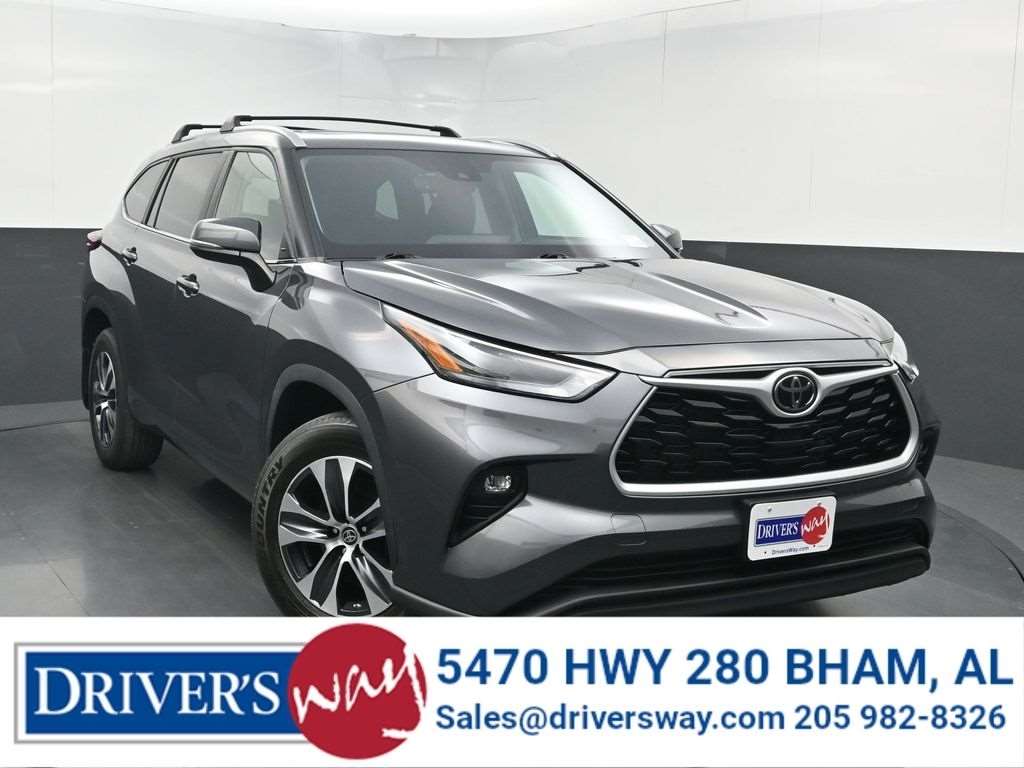
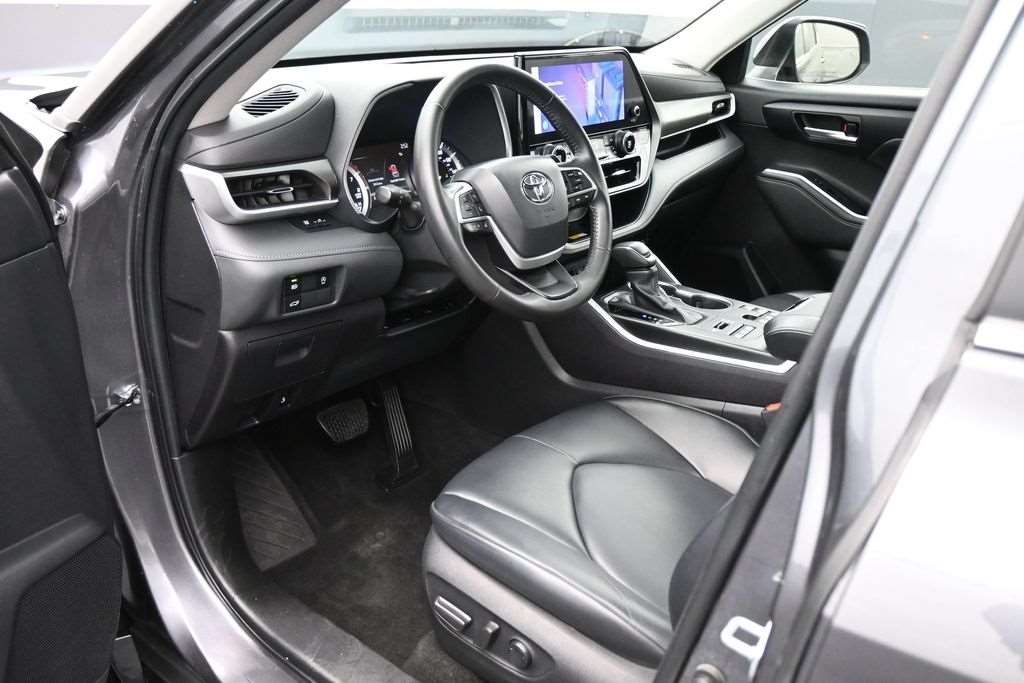
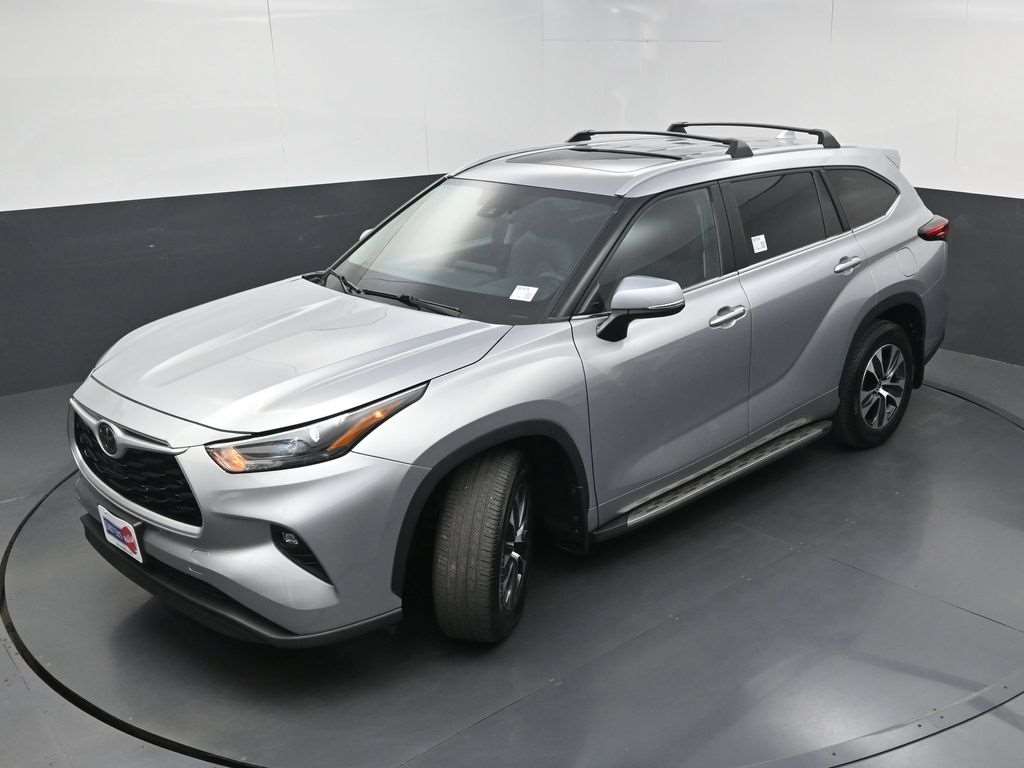
Photographed at our Hwy 280 store: a 2023 Highlander XLE, shown as an example of the fourth generation.
A 2020 to 2022 Highlander is the best mix of price, features and known-good engineering you can put in a driveway right now.
Toyota moved the Highlander onto a new platform for 2020 and the difference shows up in the two places that matter on a daily drive. The cabin got quieter and better finished, with real materials where the old car had hard plastic. And Toyota Safety Sense 2.0 became standard on every trim, which bundles adaptive cruise, lane centering and automatic emergency braking. Crash-test results for the specific year you are considering are published by the IIHS, and they are worth two minutes before you commit. On Hwy 280 at 5:15 on a Tuesday, adaptive cruise stops being a feature and starts being the reason you arrive in a better mood.
The engine question splits this generation neatly in half. The 3.5-liter V6 ran from 2020 through 2022. For 2023 Toyota replaced it with a 2.4-liter turbocharged four-cylinder, which makes more torque lower down and is a touch more efficient. Both tow 5,000 pounds. Plenty of buyers still hunt specifically for the V6 years, and the reason is simple: it is a naturally aspirated engine with a long, boring, well-documented service record, and boring is exactly what you want out of a family SUV at 140,000 miles.
The Hybrid is the mileage answer across the whole generation. It uses a 2.5-liter four-cylinder system rated at roughly 35 to 36 mpg combined against about 24 for the V6. The trade is towing, which drops to 3,500 pounds. Trims run LE, XLE, XSE, Limited and Platinum, with a base L offered early in the run, and most of the Hybrid versions mirror the gas trims.
If you want the most three-row SUV per dollar, a 2017 to 2019 Highlander is the answer, and it is not close.
This is the generation that turned the Highlander into the default answer for a family that needs seven seats and does not want a minivan. The 2014 redesign widened the body, made the third row genuinely usable for kids and dropped the noise level noticeably. It also gave the second row a choice: a bench that seats eight total, or captain's chairs that seat seven and make the walk-through to the back row a lot less athletic.
The 2017 refresh is the line that matters. Toyota fitted an updated 3.5-liter V6 with direct injection and paired it with an 8-speed automatic in place of the old 6-speed, which is worth roughly 2 mpg and makes the car feel more willing on the climb out of Oak Mountain. In the same year Toyota Safety Sense-P became standard equipment across the lineup, so even a base 2017 LE has adaptive cruise and automatic emergency braking. That combination is why 2017 to 2019 is the value sweet spot rather than 2014 to 2016.
One caution that applies to the whole generation and costs nothing to check: the base LE could be ordered with a 2.7-liter four-cylinder instead of the V6. It is not a bad engine, but it is slower with seven people aboard and it is not the car most shoppers picture. Confirm which one you are looking at. If you are also cross-shopping two rows, our guides to the best year for a used Toyota RAV4 and the best year for a used Toyota Camry cover the same ground on those.
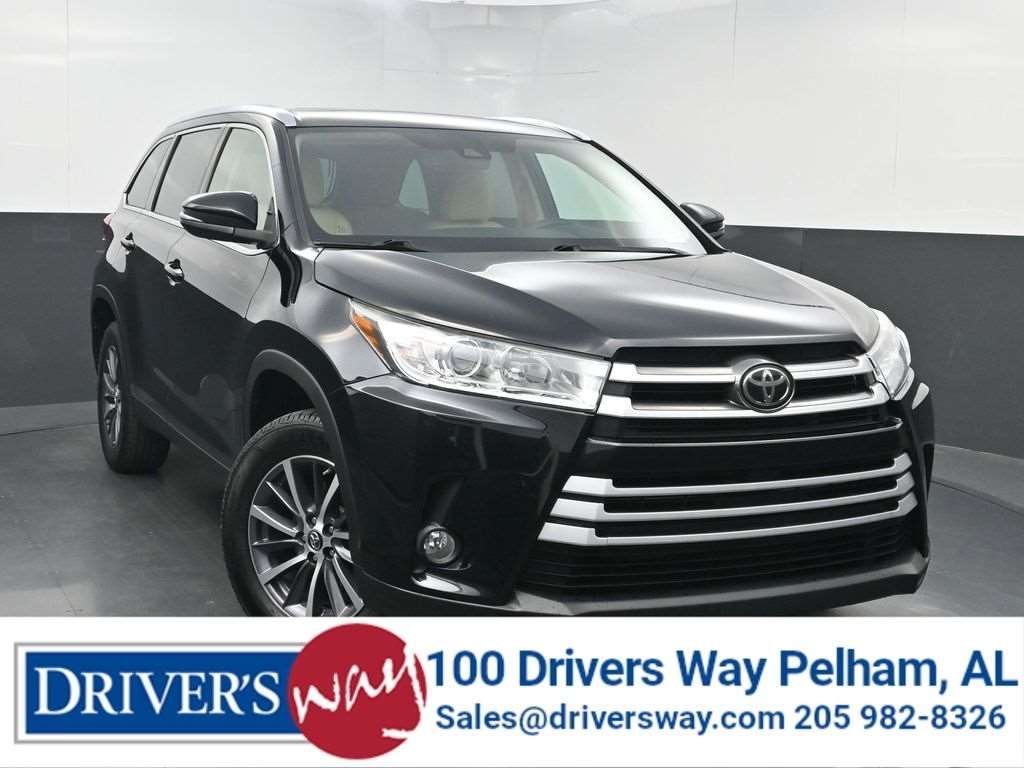
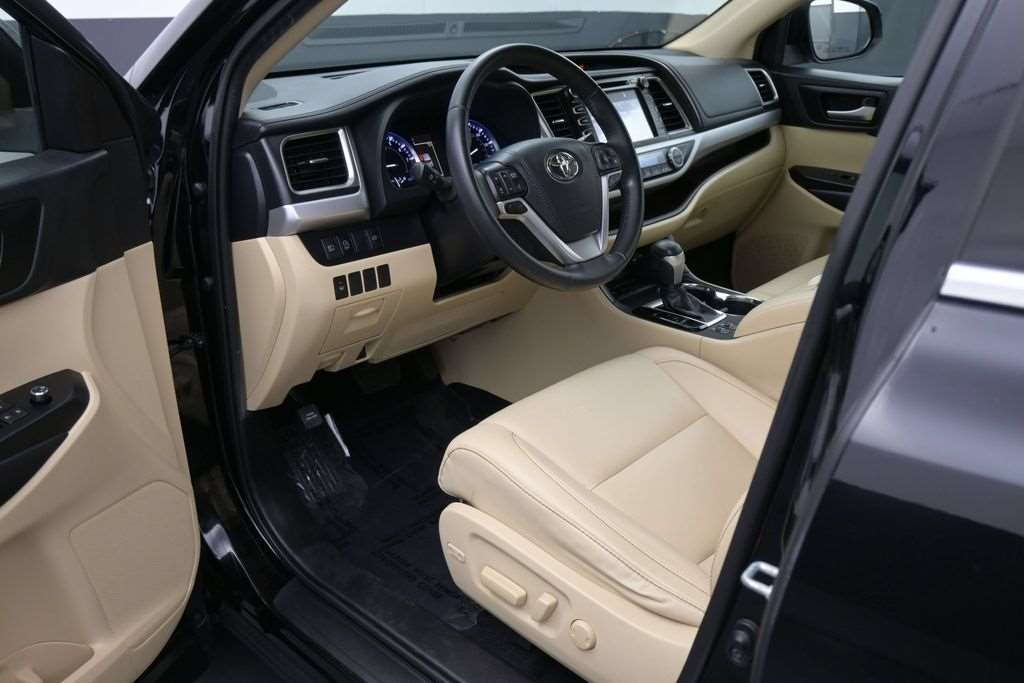
Photographed at our Hwy 280 store: a 2019 Highlander XLE, shown as an example of the refreshed third generation.
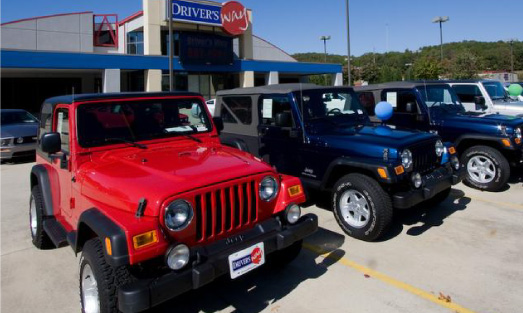
Our Hwy 280 lot. Second-generation Highlanders come and go, so call before you drive out for a specific year.
The cheapest honest way into a Toyota three-row, as long as you buy the paperwork and not the odometer.
The second-generation Highlander is where a lot of families land when the budget is firm and the seat count is not negotiable. It is bigger than the first-generation car, it has a sliding second-row bench, and with the 3.5-liter V6 it still tows 5,000 pounds. For a household that needs to move six people to a Trussville ball field twice a week, that is the whole requirement met for the price of a compact sedan.
Toyota offered three powertrains across the run. The 3.5-liter V6 is the one to look for and is by far the most common. A 2.7-liter four-cylinder joined the lineup for 2009 as the economy option, and it works, but it asks a lot of itself with a full car. A V6 hybrid was also sold through this generation. On a car this old the hybrid can still be a good buy, but the battery becomes a real line item in the decision, so price it in rather than hoping.
At this age the car matters less than the paperwork. A well-kept 2011 with a stack of service records beats a neglected 2013 every single time, and it is not a close call. This is also the range where a solid extended service plan earns its keep, and where our Pelham service center becomes part of the value, since it works on all makes and is open on Saturdays.
Every Driver's Way price is the price. No negotiation, no four trips to a manager's office, and nobody on our sales floor works on commission, so nothing below is steering you up a tier. If you want to shop by price first, start with our vehicles under $20,000 and work up from there.
Seven or eight seats, 5,000 pounds of towing and a drivetrain that routinely passes 200,000 miles. Buy the one with the thickest service file, not the lowest number on the odometer.
The updated V6, the 8-speed automatic, standard Toyota Safety Sense-P and second-row captain's chairs. This is the recommendation for most families shopping the Hwy 280 and Inverness corridor.
New platform, Toyota Safety Sense 2.0 standard, the far better cabin and the 3.5-liter V6 still under the hood. If your commute is long and you tow nothing, drive the Hybrid version back to back with it.
Everything above is what you would have to check yourself buying from a stranger on Facebook Marketplace. Buying from us, it is already done and written down. If you want the full walkthrough, we published what to look for when buying a used car and a guide to how many miles is too many on a used car. When you are ready to move, Fast Lane Purchase handles most of the paperwork before you get here.
Every SUV we list is inspected and reconditioned before it goes on the lot.
Nearly three decades of used cars in the Birmingham metro, at two locations.
Nobody here earns more by putting you in a bigger car than you came for.
Every listing includes the CARFAX report. Read it before you drive, not after.
Reviews from our Hwy 280 store, pulled live from Google.
We are at 5470 Hwy 280, a few minutes from Inverness, about ten from Hoover and fifteen from Mountain Brook. Check our current SUV inventory or the full used Toyota lineup, then schedule a test drive and we will have it out front. If the Highlander you want is sitting at our Pelham store, tell us and we will bring it over. Service and reconditioning happen at Pelham for both stores.
Check our current SUV inventory, tell the Car Finder what you are after, or find out what your current vehicle is worth toward it.
Driver's Way Hwy 280 | 5470 Hwy 280, Birmingham, AL 35242