

We sell both, we stock both, and nobody here earns a dollar more if you pick one over the other. So here is the comparison without a thumb on the scale.
Buy the used Camry if you want all-wheel drive, the strongest resale value, or a V6. Buy the used Accord if you want a bigger back seat, a bigger trunk, and the car that is more enjoyable to drive.
On reliability there is no meaningful winner. Both are at the top of the segment, and the difference between two individual cars with different service records is far larger than the difference between the badges.
Both cars carry a win badge wherever they genuinely win. That is not diplomacy, it is that these two are close enough that a one-sided table would be a lie.
| What You Care About | Toyota Camry | Honda Accord |
|---|---|---|
| Rear legroom | About 38.0 inches | About 40.4 inches Win |
| Trunk space | About 15.1 cubic feet | About 16.7 cubic feet Win |
| All-wheel drive | Available on four-cylinder from 2020 Win | Not offered |
| Six-cylinder option | 3.5-liter V6, around 301 hp Win | None. A 2.0-liter turbo four replaced it, around 252 hp |
| Hybrid fuel economy | Camry Hybrid LE around 52 mpg combined Win | Accord Hybrid around 47 to 48 mpg combined |
| Gas fuel economy | 2.5-liter around 32 mpg combined | 1.5-liter turbo around 33 mpg combined Win |
| Driver assistance | Toyota Safety Sense standard from 2018 | Honda Sensing standard from 2018 |
| Resale value | Consistently the stronger of the two Win | Strong, and usually cheaper to buy as a result |
| How it drives | Composed and easy. Improved a lot in 2018 | The more engaging car by a clear margin Win |
| Reliability record | Top of the segment | Top of the segment |
Figures are published manufacturer specifications for the 2018 and newer generations and vary by trim and model year. Fuel economy is the EPA combined rating for front-wheel-drive versions, published at fueleconomy.gov. Check the specific car, since a V6 Camry and a hybrid Camry share almost nothing but a badge.
Back to top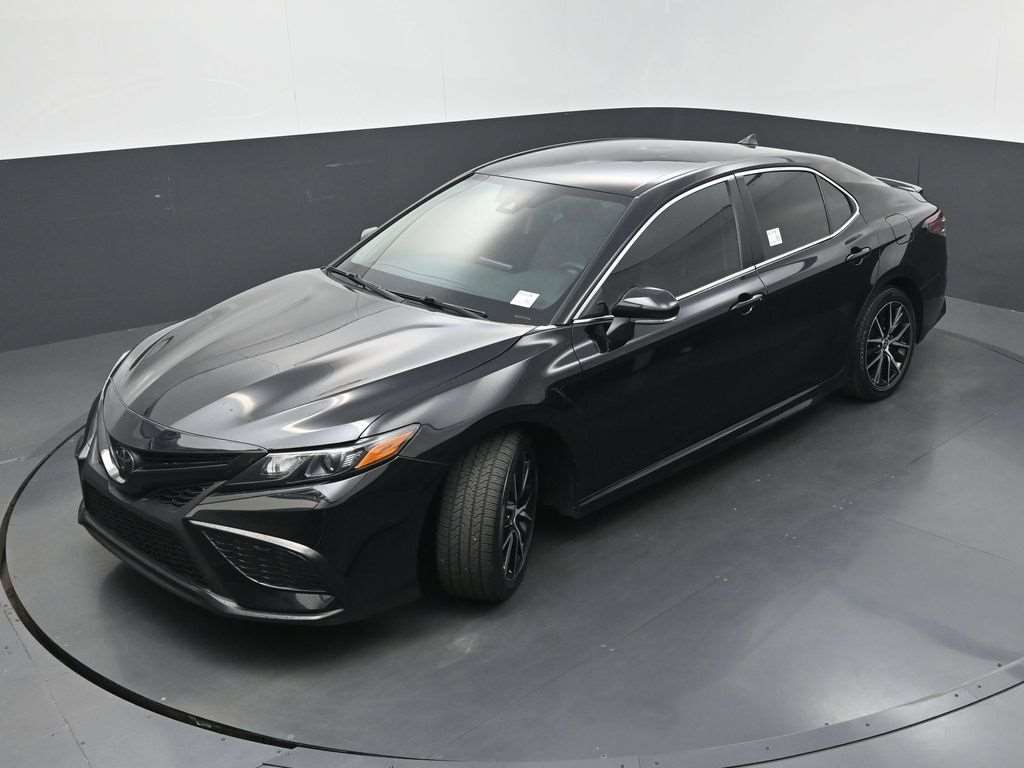
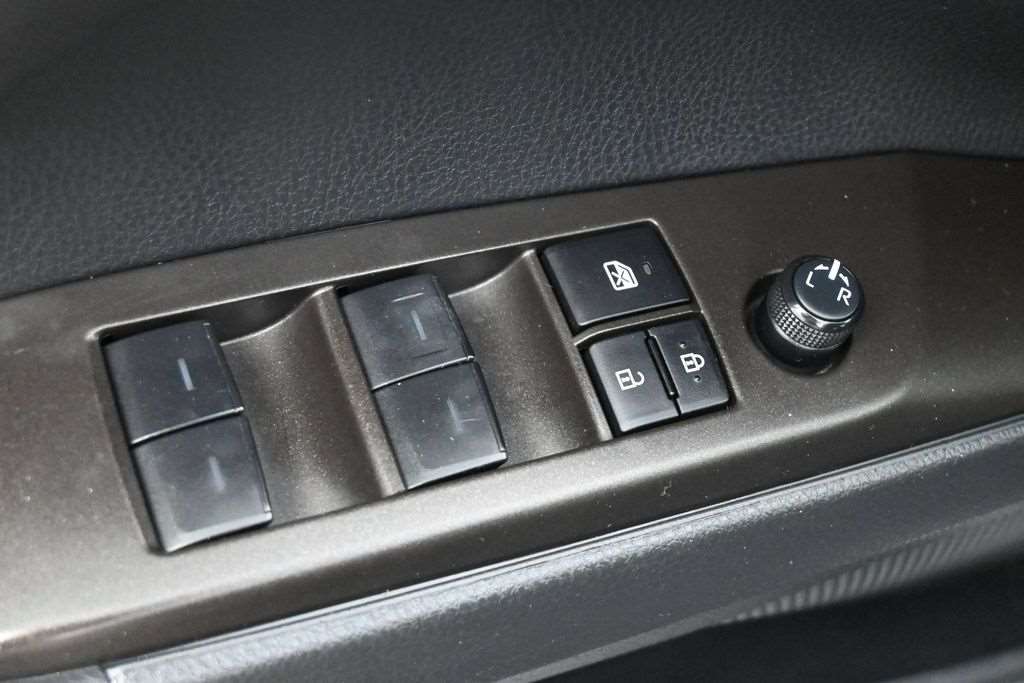
All-wheel drive. Toyota added it to the four-cylinder Camry for 2020 and Honda has no answer in this generation. For most of Birmingham this is a nice-to-have rather than a need, but if your street climbs off Shades Mountain or you come in from Chelsea on a wet morning, it is the whole argument.
A V6. The 3.5-liter makes around 301 horsepower and pulls in a way no turbo four quite mimics. Honda's answer was a 2.0-liter turbo making about 252, which is quicker than you expect and was gone after 2020. If you want the six, only one of these cars has one.
The hybrid math. Camry Hybrid LE sits near 52 mpg combined against roughly 47 to 48 for the Accord Hybrid. Over a real commute that is a meaningful gap, and it is why we point high-mileage drivers at the Camry Hybrid first.
The back seat is the headline. Around 40.4 inches of rear legroom against roughly 38.0 in the Camry is not a rounding error, it is the difference between an adult being comfortable behind a tall driver and an adult being polite about it. Fit a rear-facing car seat in both and you will feel it immediately.
The trunk follows. About 16.7 cubic feet against 15.1. Two large suitcases and a stroller is an easy afternoon in the Accord and a puzzle in the Camry. For a family car that lives at soccer fields and airports, that is a real advantage.
And it is the better drive. The Camry got much more interesting in 2018 and the Accord is still ahead, with sharper steering and a chassis that feels like somebody enjoyed setting it up. Because the Accord gives back slightly less at resale, a comparable one usually sits on the lot at a lower price, which makes it the value pick as well.
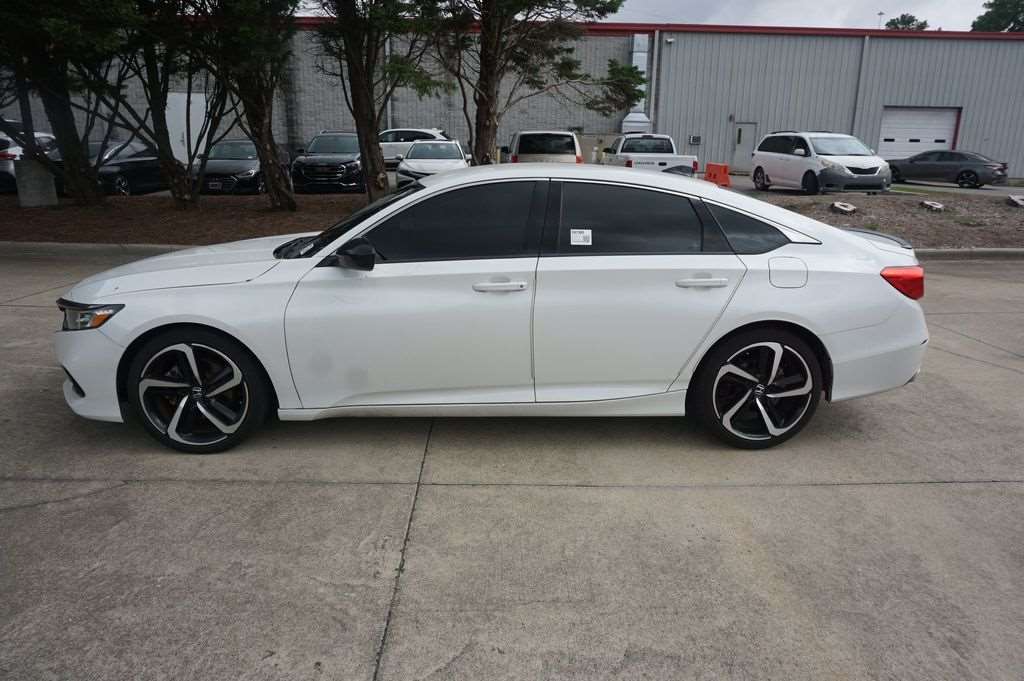
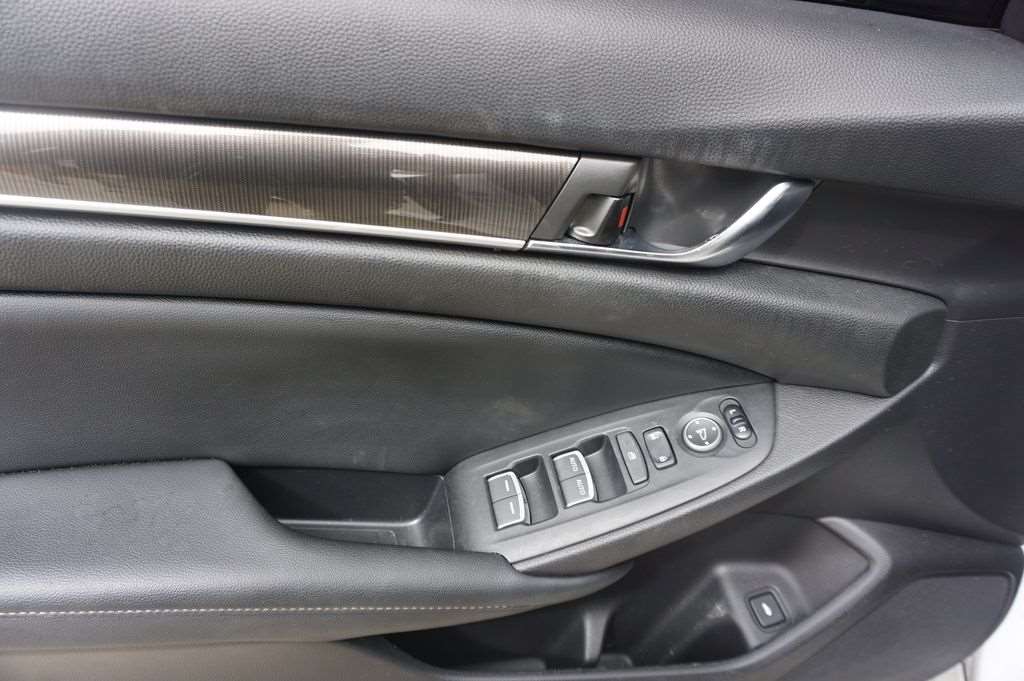
Both cars were redesigned for 2018, which is why that year is the natural starting point for a used comparison. Everything below varies by trim, so confirm against the window sticker of the specific car.
| Specification | Toyota Camry | Honda Accord |
|---|---|---|
| Base engine | 2.5-liter four-cylinder, around 203 hp | 1.5-liter turbo four, around 192 hp |
| Upgrade engine | 3.5-liter V6, around 301 hp | 2.0-liter turbo four, around 252 hp, through 2020 |
| Hybrid system | Around 208 hp combined | Around 204 to 212 hp combined by generation |
| Drivetrain | Front-wheel drive, all-wheel drive on four-cylinder from 2020 | Front-wheel drive only |
| Rear legroom | About 38.0 inches | About 40.4 inches |
| Trunk volume | About 15.1 cubic feet | About 16.7 cubic feet |
| Gas EPA combined | Around 32 mpg on the 2.5-liter | Around 33 mpg on the 1.5-liter turbo |
| Hybrid EPA combined | Around 52 mpg on the Hybrid LE | Around 47 to 48 mpg |
| Standard safety suite | Toyota Safety Sense from 2018 | Honda Sensing from 2018 |
| Adaptive cruise | Standard with the safety suite, includes low-speed follow | Standard with the safety suite, includes low-speed follow |
Both nameplates were redesigned for 2018 and both gained a standard driver-assistance suite in the same year. That makes 2018 the floor for either car, and it makes anything older a different comparison entirely.
First years of the current design, with the full safety suite already standard. Meaningfully cheaper than a 2021 without giving up anything a buyer notices day to day.
The years all-wheel drive became available, with the rest of the car already sorted. If AWD is on your list at all, this is the range to shop.
The quickest and most entertaining non-hybrid version of either car, and it disappeared after 2020. Prices have not caught up with how good it is.
Reviews from our Hwy 280 store, pulled live from Google.
This comparison is settled in about twenty minutes if you drive both in the same afternoon. We are at 5470 Hwy 280 in Birmingham, with more used sedans at our Pelham store, and we will move a car between the two so you can compare them side by side. If you want more background first, we also cover the best years for a used Camry and the most reliable used cars overall.
We stock Camrys and Accords at both locations, every one through a 240-point inspection, with the price on the window and nobody working on commission.
Driver's Way Hwy 280 | 5470 Hwy 280, Birmingham, AL 35242